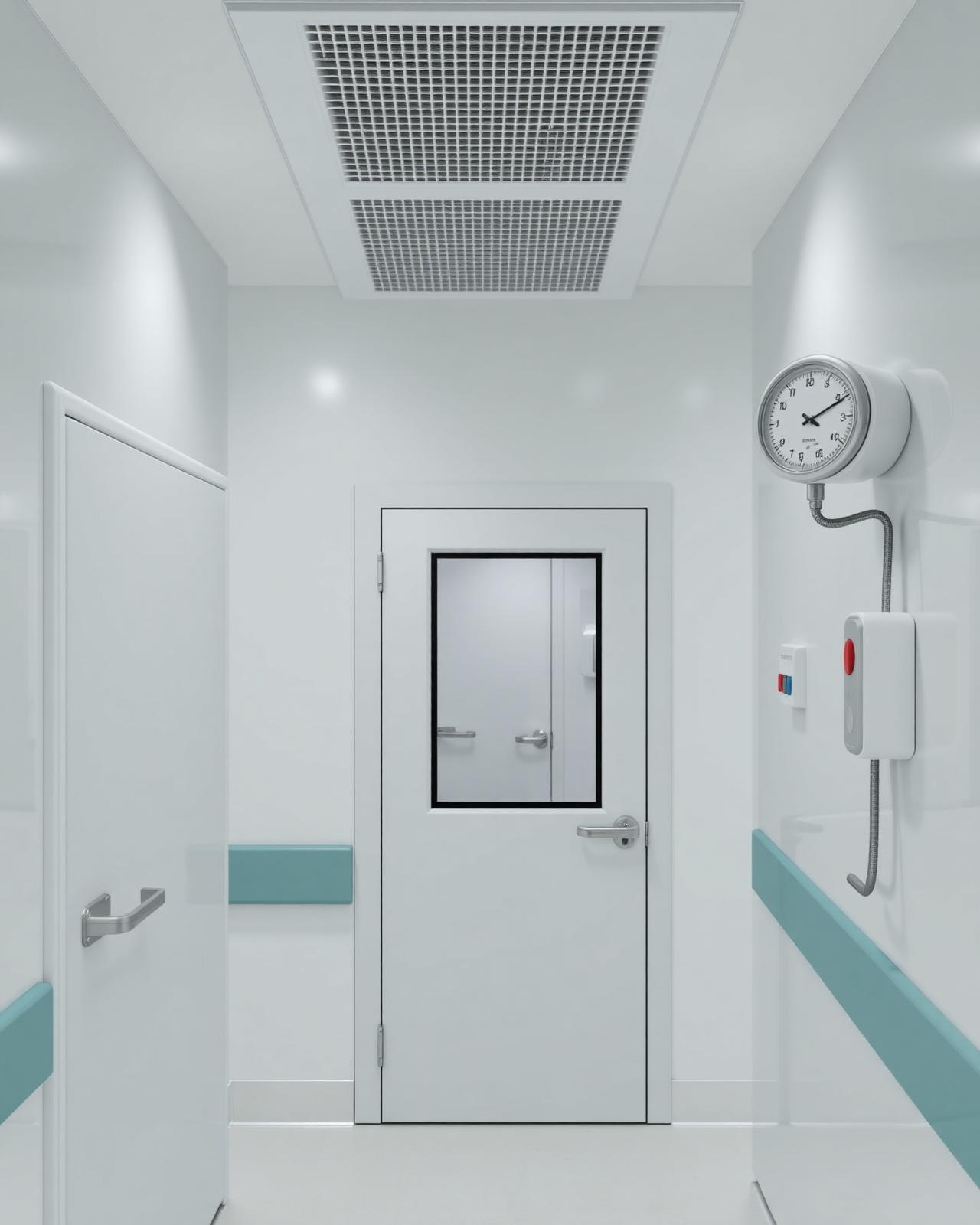
Airborne and protective isolation
Airborne isolation rooms run at negative pressure to contain pathogens released from the patient. Protective isolation rooms run at positive pressure to protect immunocompromised patients. Both rely on the room remaining within specification during normal clinical operation, not just at commissioning.
What our testing covers
Each room is tested for steady-state pressure differential against the corridor and adjacent rooms, air change rate at the supply and extract grilles, smoke visualisation of directional airflow at the door, and the integrity of any anteroom airlock. We record BMS readings alongside our calibrated instruments to surface any sensor drift.
Outputs and remediation
Reports include per-room status against HTM 03-01, photographs of any defects, and a prioritised remediation list. Where isolation rooms fail, we map the remediation work back to the contamination control and ventilation hygiene plan for the wider ward.
Next step
Talk to a healthcare air quality specialist
Independent technical support for hospital ventilation, HTM 03-01 compliance, environmental monitoring and infection control air quality.