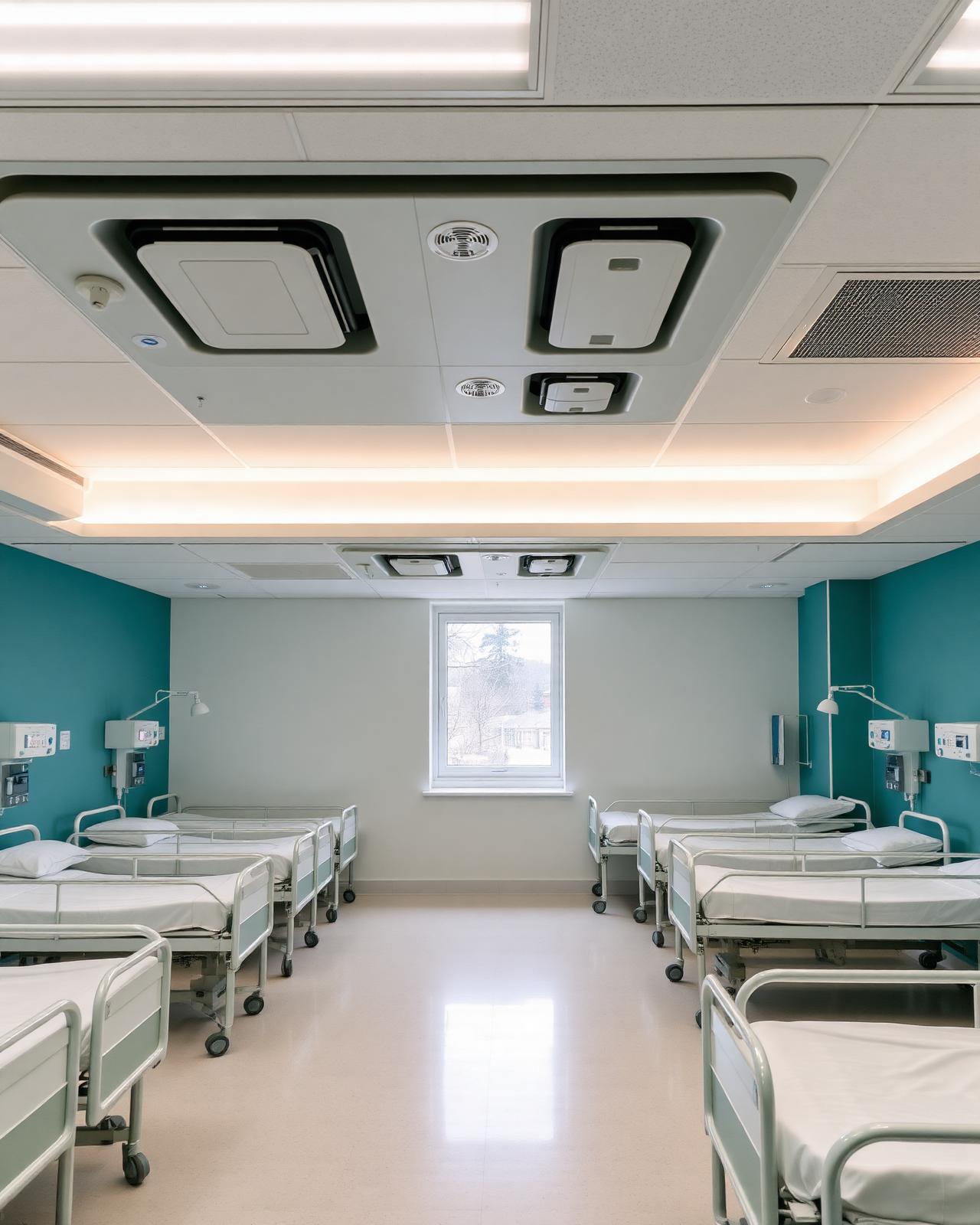
What healthcare IAQ covers
Healthcare indoor air quality is the combined state of particulates (PM2.5, PM10), carbon dioxide, volatile organic compounds, formaldehyde, temperature, humidity, airborne microbial load and the ventilation behaviour that drives those values. Unlike a general office, healthcare IAQ is also concerned with directional airflow, pressure cascades between rooms and the integrity of filtration that protects immunocompromised patients.
Why hospital indoor air quality matters
Poorly performing ventilation has been linked to increased airborne transmission of respiratory pathogens, post-surgical infection risk in theatres, staff absenteeism and patient complaints. Indoor air quality in healthcare is therefore tracked as part of infection prevention, building safety, decarbonisation and patient experience programmes — not as a standalone facilities issue.
How indoor air quality is managed in healthcare
Estates teams combine periodic ventilation validation, continuous air monitoring in higher-risk areas, planned preventative maintenance of AHUs and ductwork, and investigation-led testing when issues are reported. Together these activities form an indoor environmental quality programme that maps onto HTM 03-01, the HBN suite and the relevant cleanroom standards where applicable.
Next step
Talk to a healthcare air quality specialist
Independent technical support for hospital ventilation, HTM 03-01 compliance, environmental monitoring and infection control air quality.