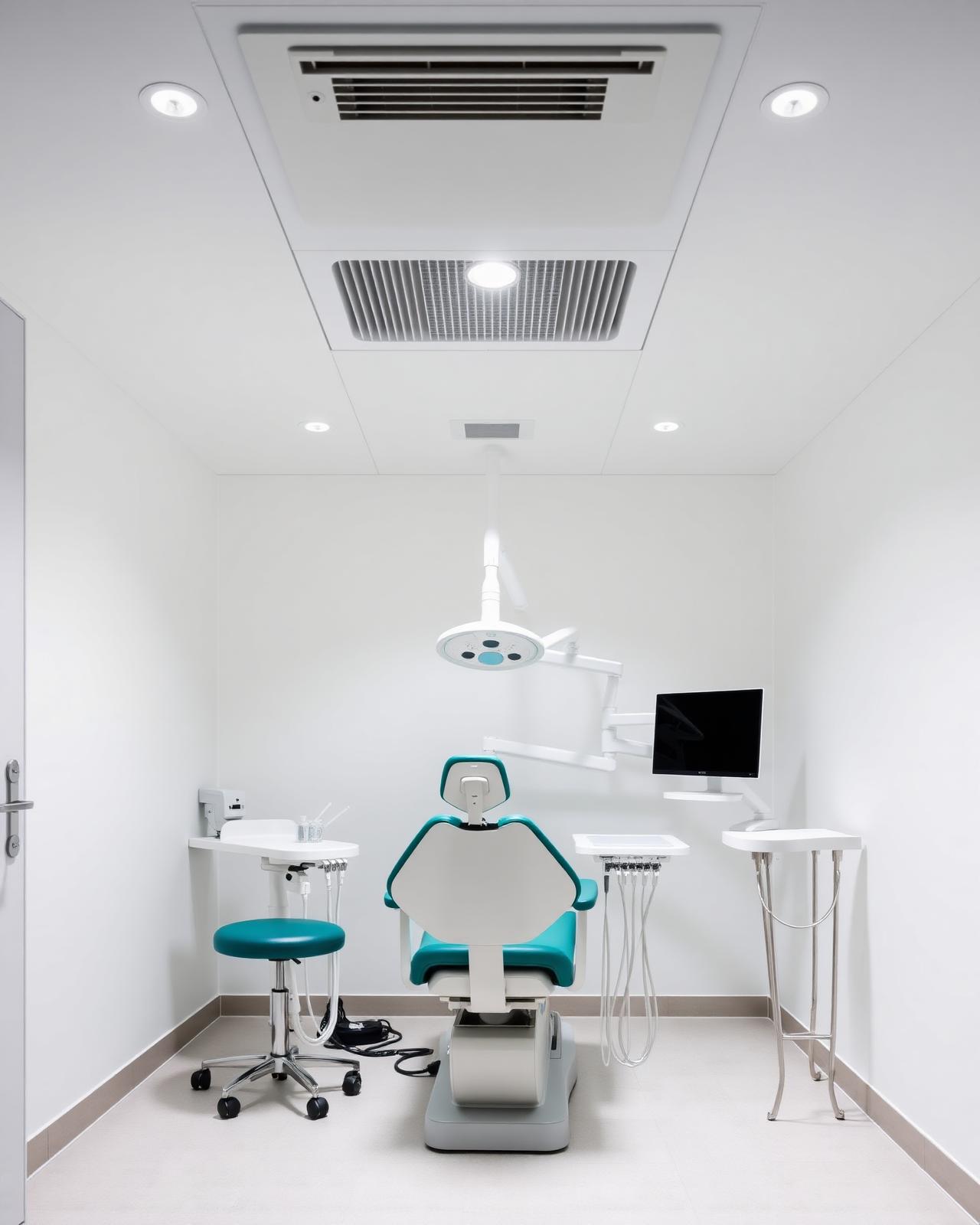
Why dental practices need air quality data
Aerosol-generating procedures, proximity to patients and back-to-back appointment schedules combine to make ventilation important in dental care. Many practices operate in converted commercial premises where ventilation was not originally designed for clinical use.
What we measure in dental settings
CO₂ as a ventilation proxy, particulate behaviour during and after procedures, air change rates per surgery and reception area, and the recovery time of the room after an aerosol-generating event. Where required, we also assess local extract at the chair.
Outputs for dental practices
Practical written reports with ventilation status per surgery, recommendations for any adjustment and supporting commentary suitable for CQC evidence files. Findings often feed into a wider clinic indoor air quality programme.
Next step
Talk to a healthcare air quality specialist
Independent technical support for hospital ventilation, HTM 03-01 compliance, environmental monitoring and infection control air quality.